Simple Tools. Smarter Strategy.
Check out our free resources to help you move forward with confidence.

How to Manage Construction Retainage and Protect Your Project Cash Flow
You earned the revenue, but you’re still waiting on the cash. Learn why retainage creates cash flow pressure for contractors and how proper tracking and reconciliation prevent reporting confusion and margin distortion.

5 Strategies to Manage Slow-Paying Clients and Protect Your Cash Flow
It feels like a client problem. But most of the time, it’s a system problem. Slow-paying clients don’t usually create the issue. They expose weaknesses in your billing, job setup, and collections process.
Accounts Receivable & Collections for Contractors(Why Cash Flow Problems Are Usually a Systems Failure, Not a Payment Problem)
You finish the work.
The crew moves on.
Payroll clears.
But the invoice? It’s still sitting unsent — or worse, already sent and quietly aging.
Most contractors don’t think about accounts receivable until cash gets tight. By then, invoices are 45–90 days old, approvals are unclear, and no one can confidently answer a basic question:
How many invoices are outstanding right now — and how are we collecting them?

Why Profitable Contractors Still Feel Broke
You’re winning work. Jobs are closing with profit on paper. Your P&L shows healthy margins.
But the bank account never reflects it.
Payroll weeks are stressful. Material purchases tighten cash. You delay owner pay even though reports say the business is profitable.

Cash Flow Management for Contractors (Why Profit ≠ Cash)
The work is there. Crews are busy. Jobs show profit.
But cash feels tight all the time.
Payroll weeks are stressful. Vendor balances creep up. Deposits hit the bank and disappear faster than expected. Even when nothing looks “wrong,” the business never feels ahead.

Why Revenue Is a Lie Without Job-Level Profit Tracking
Contractor Pain Point: “We Did $3M Last Year… So Why Is Cash Tight?”
You look at your revenue report and it feels solid. Jobs are booked. Crews are busy. Invoices are going out.
But somehow:
Cash is always tighter than it should be
One bad job wipes out months of “good” work
You don’t know which projects actually made money
How Contractors Actually Identify Profitable Services Using Job Costing
Most contractors already track jobs, labor, and materials.
But when they try to answer:
Are commercial jobs better than residential?
Which parts of our work actually make money?
Is labor the problem, or materials?
The reports don’t give clear answers.

Why Job Costing Breaks When Project Folders Are Inconsistent(And How Contractors Should Structure Jobs So Numbers Match Reality)
A job finishes and the numbers don’t make sense.
Materials look light. Labor feels high. Sub costs seem incomplete. The office says invoices were entered. The field says receipts were turned in. Nobody can point to what’s missing — but everyone knows something is.
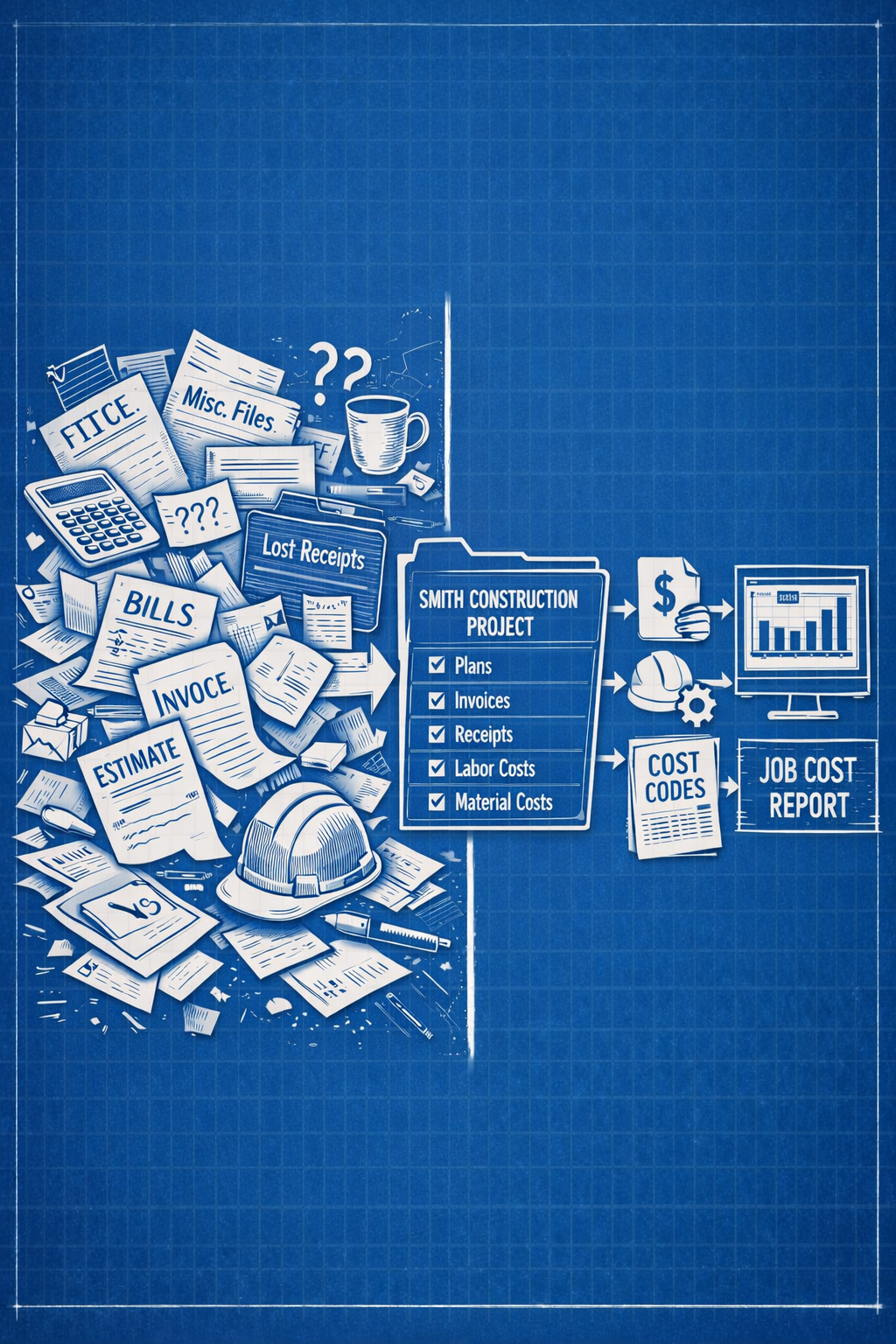
Job Folder & Project Setup for Contractors (Why Clean Jobs Make or Break Job Costing)
A job finishes. Cash came in. Crews stayed busy.
But when you try to confirm whether the job actually made money, the trail breaks down:
Vendor invoices are scattered across email inboxes
Receipts live on phones
Change orders aren’t tied to the job
Labor hours don’t clearly support the cost report
This isn’t an accounting failure.
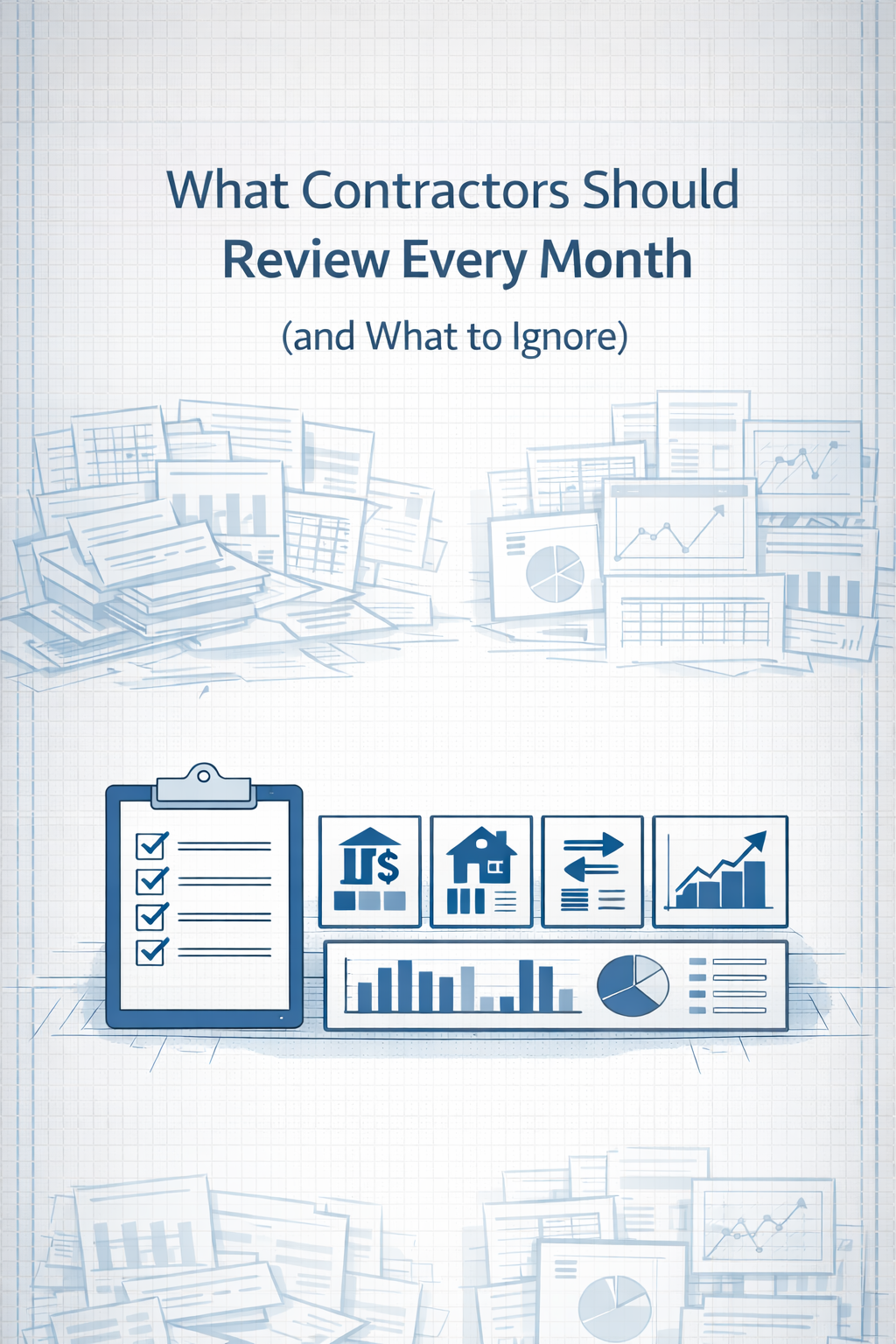
What Contractors Should Review Every Month (and What to Ignore)
Most contractors do something at month-end. They open QuickBooks, glance at a Profit & Loss, maybe check the bank balance, then move on.
But the feeling is always the same:
Jobs felt busy, but margins don’t line up
Cash moved, but you’re not sure why
The reports exist, but they don’t answer real questions
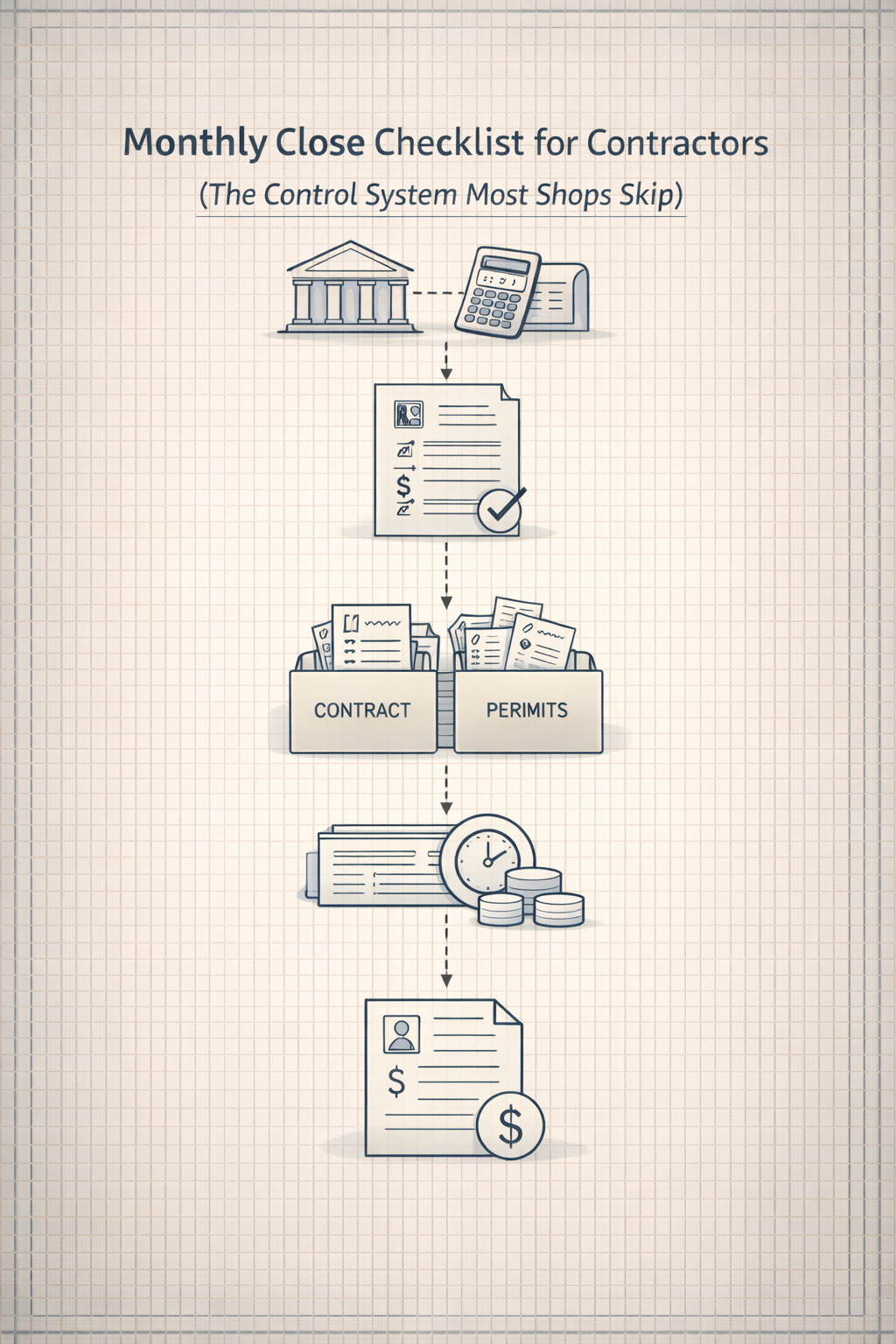
Monthly Close Checklist for Contractors (The Control System Most People Skip)
It’s the 10th of the month. Payroll already hit. Vendors are calling.
You pull reports, but something feels off.
Cash doesn’t match the bank. Job costs look incomplete. Last month’s numbers keep changing.
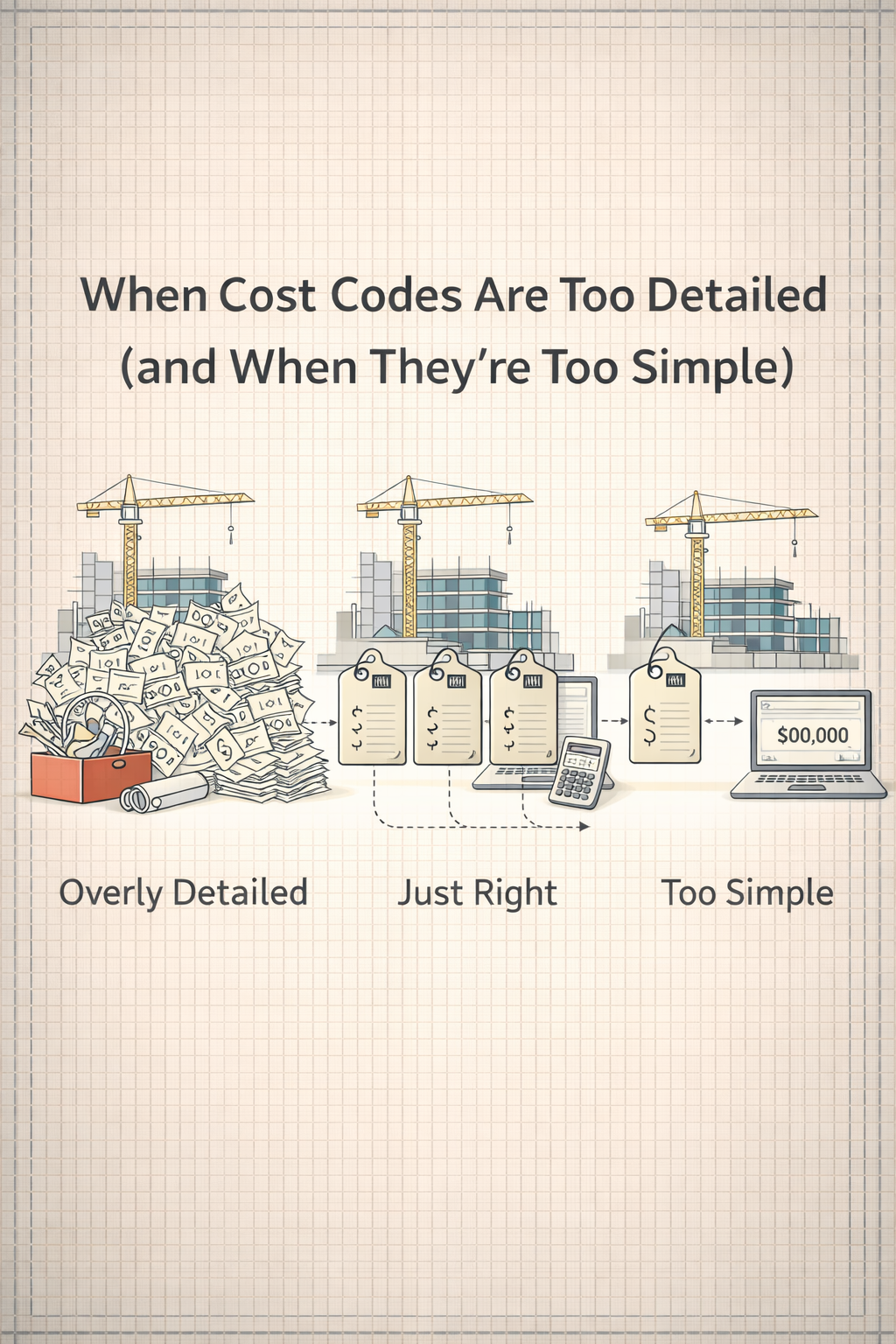
When Cost Codes Are Too Detailed (and When They’re Too Simple)
One contractor sees 30 cost codes for a small remodel and still can’t tell where profit leaked. Another has four total cost codes across every job and wonders why labor always “looks fine” until cash runs out.
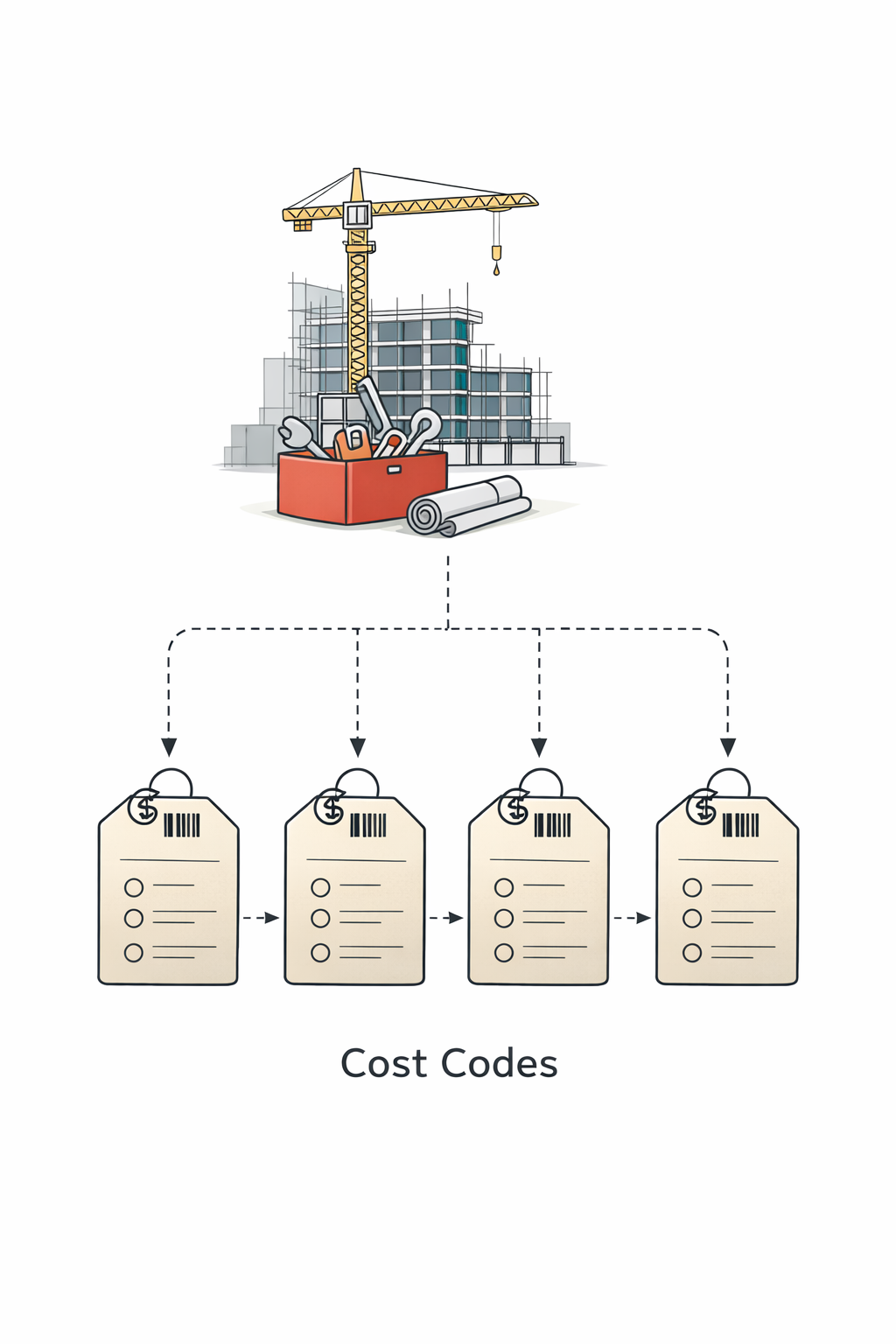
How Contractors Should Set Up Cost Codes in Their Accounting System
A project wraps up. Cash hit the bank. The job felt profitable. But when you try to review labor, materials, and subs by phase, the numbers don’t line up—or worse, everything is lumped into one bucket.
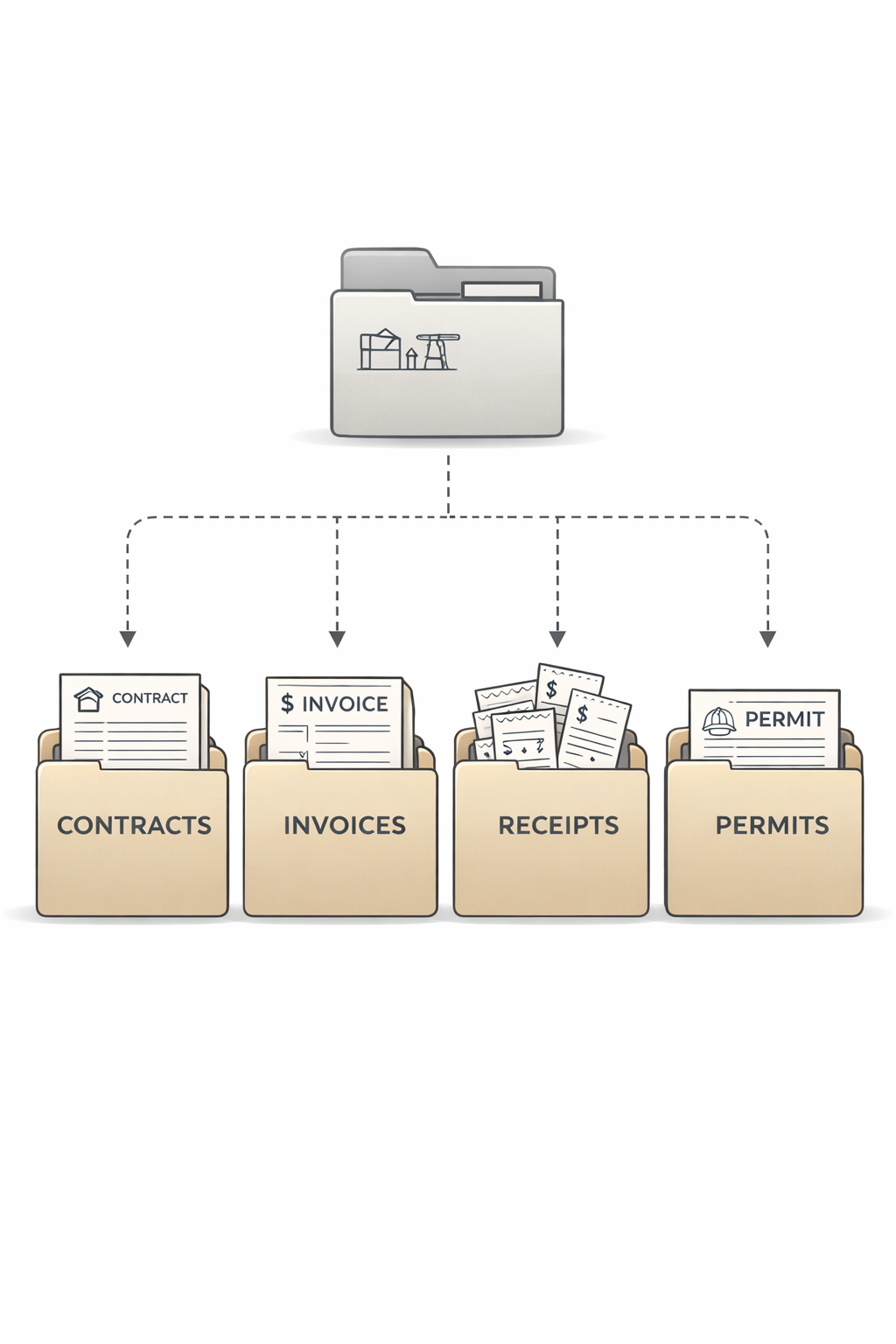
The One Folder Rule That Prevents Accounting Chaos
The invoice came in. The receipt exists. The signed change order was saved. But when payroll hits, or a job review comes up, no one can find the paperwork fast enough to prove where the money went.
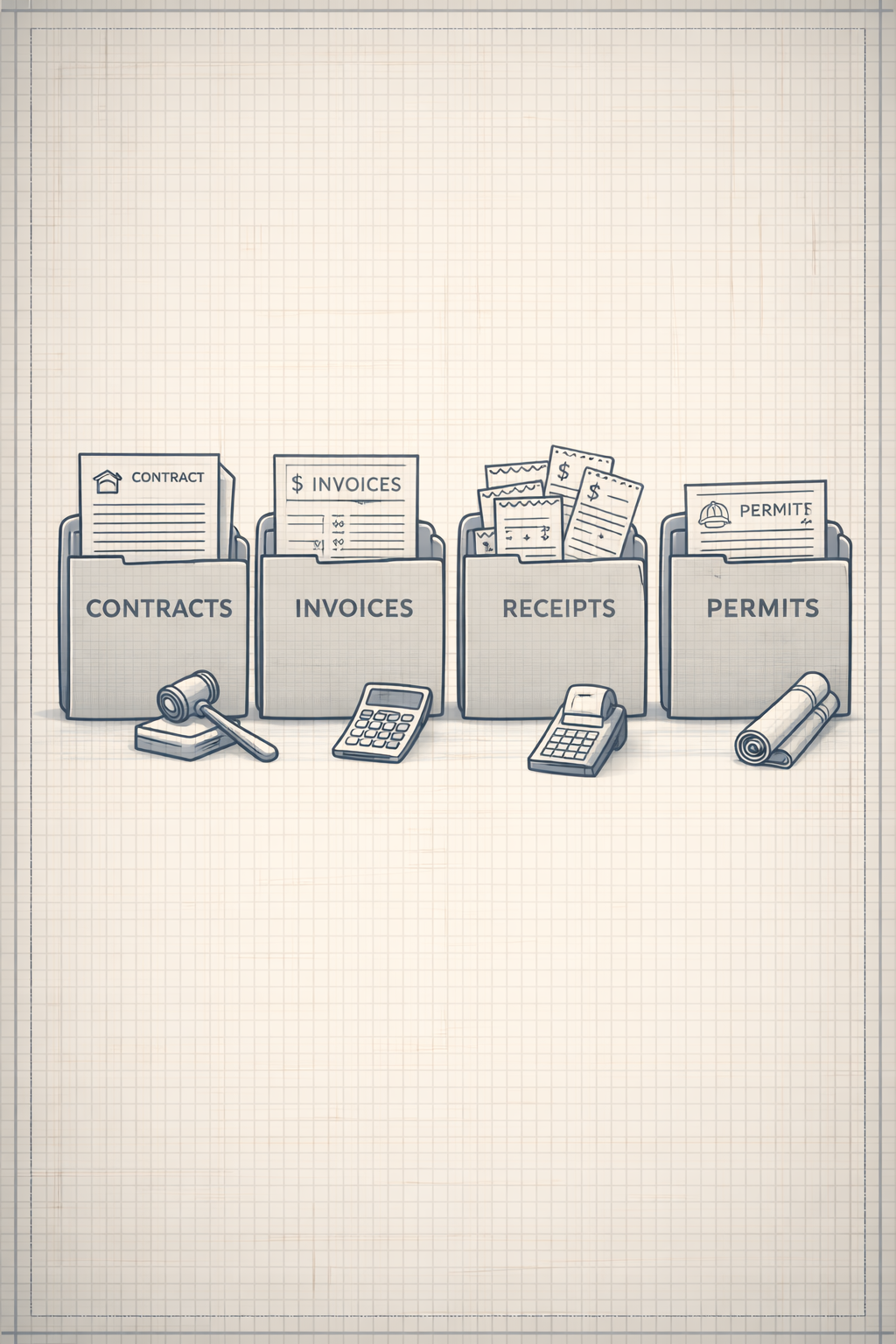
How Contractors Should Organize Digital Receipts & Job Documents (So Job Costing Actually Works)
You know the documents exist — emails, texts, photos, QuickBooks attachments — but no one can find the full trail fast.
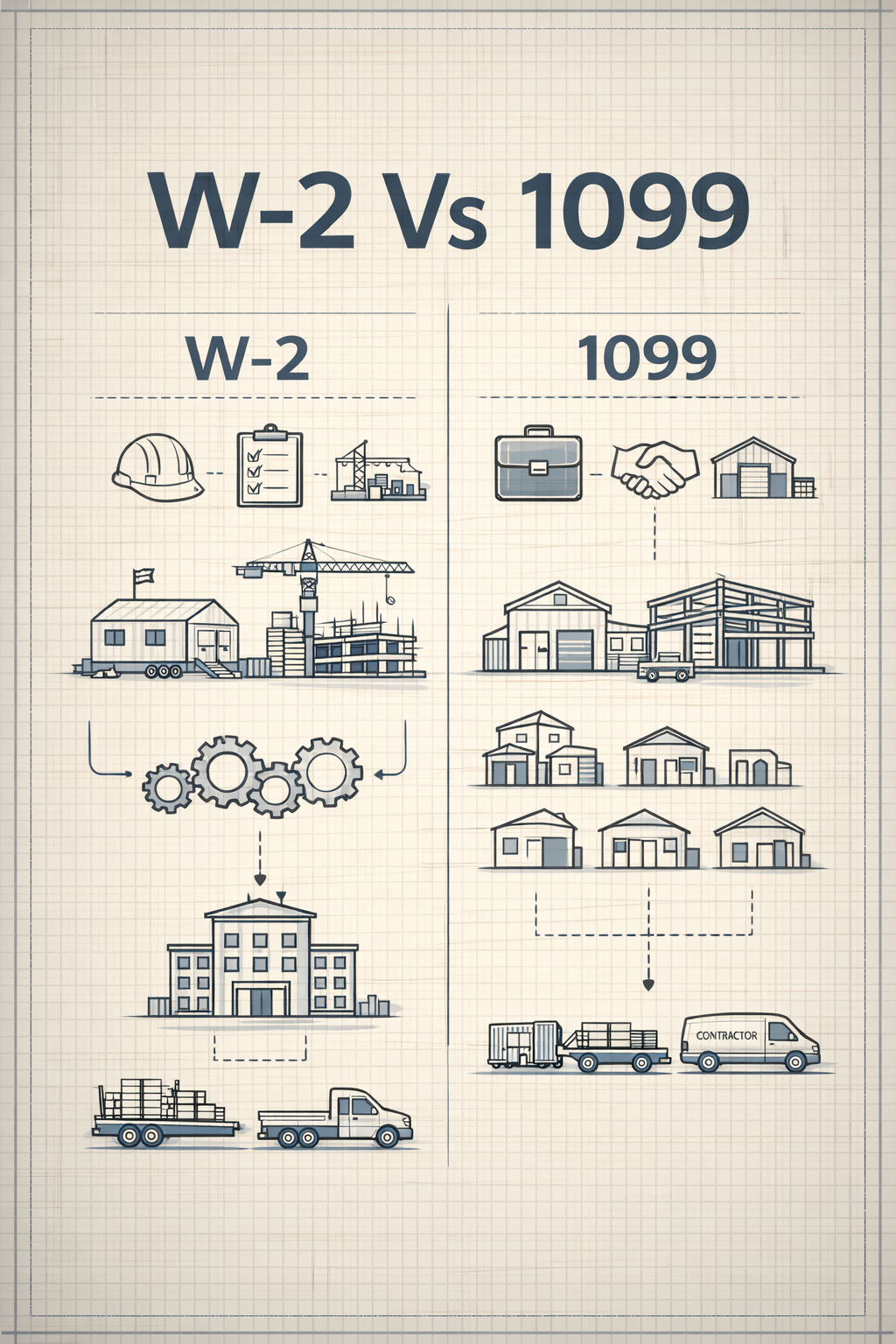
W-2 vs 1099 in Construction: How Contractors Get This Wrong (And Why Short-Term Labor Still Counts)
W-2 vs 1099 in construction isn’t about finding loopholes. It’s about understanding where labor sits on the control–independence spectrum and structuring relationships to match reality.
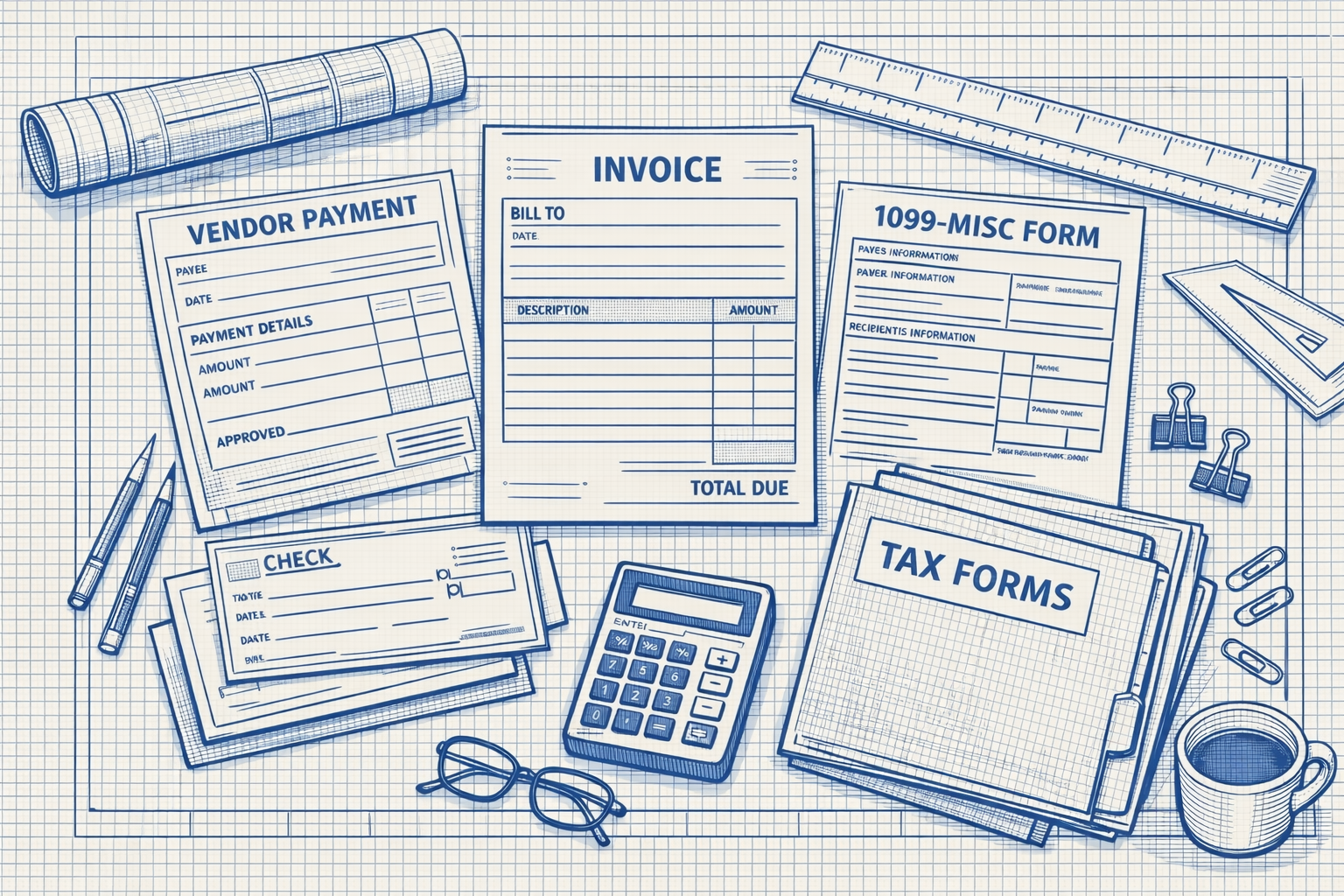
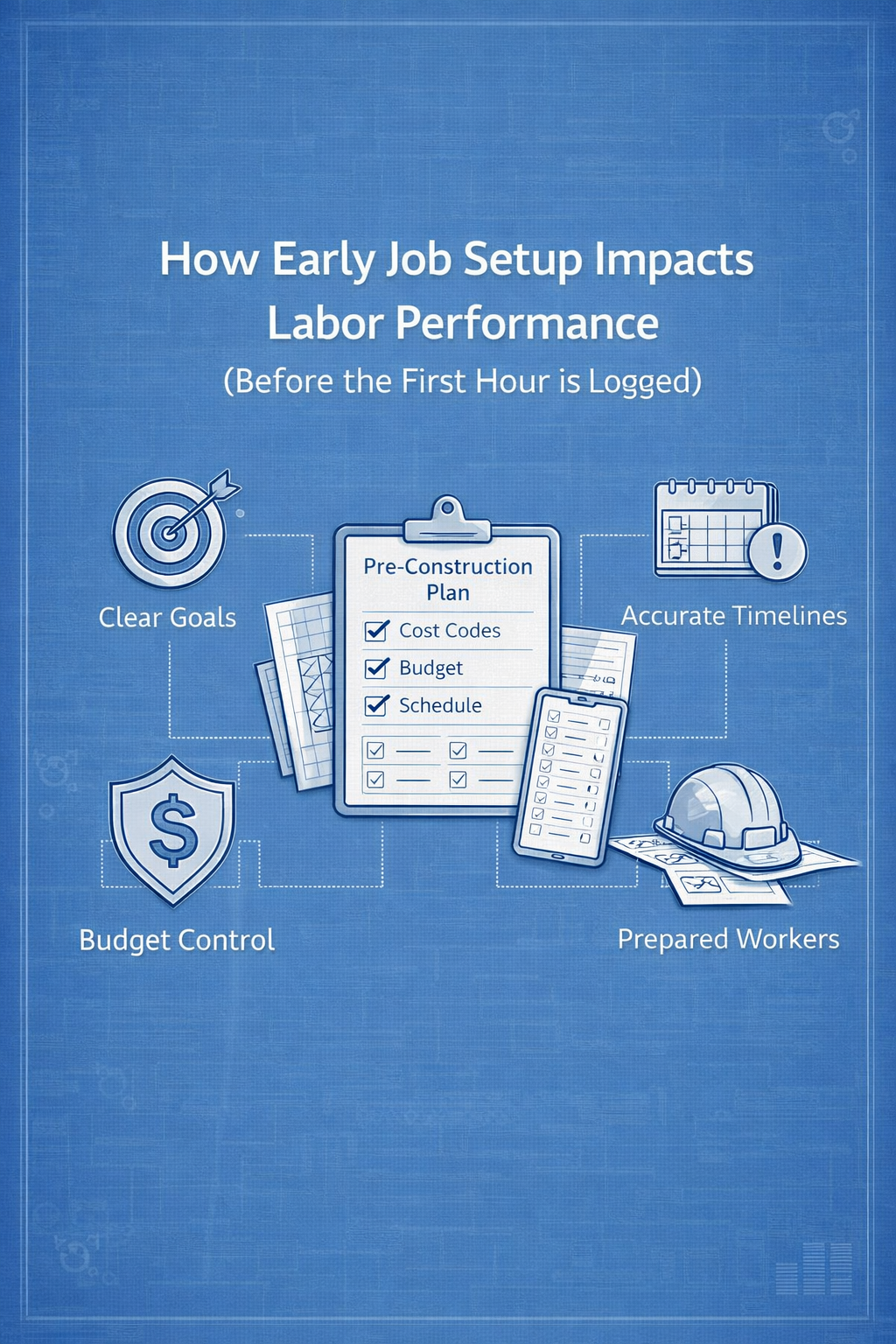
How Early Job Setup Impacts Labor Performance (Before the First Hour Is Logged)
Labor performance problems don’t start in the field—they start at job setup. When labor budgets, cost codes, and payroll mapping aren’t built before the first hour is logged, overruns stay hidden until the job is over. Early job setup is what makes labor performance measurable, visible, and correctable while the job is still running.
Labor Tracking & Payroll Allocation for Contractors
Labor is the number one reason contractors lose money on jobs — not materials or subs. The problem isn’t effort, it’s visibility. In this guide, we break down a simple system for tracking labor by job, phase, and cost code, explain why payroll works differently in construction, and show how understanding true labor cost helps you protect profit before a job slips.
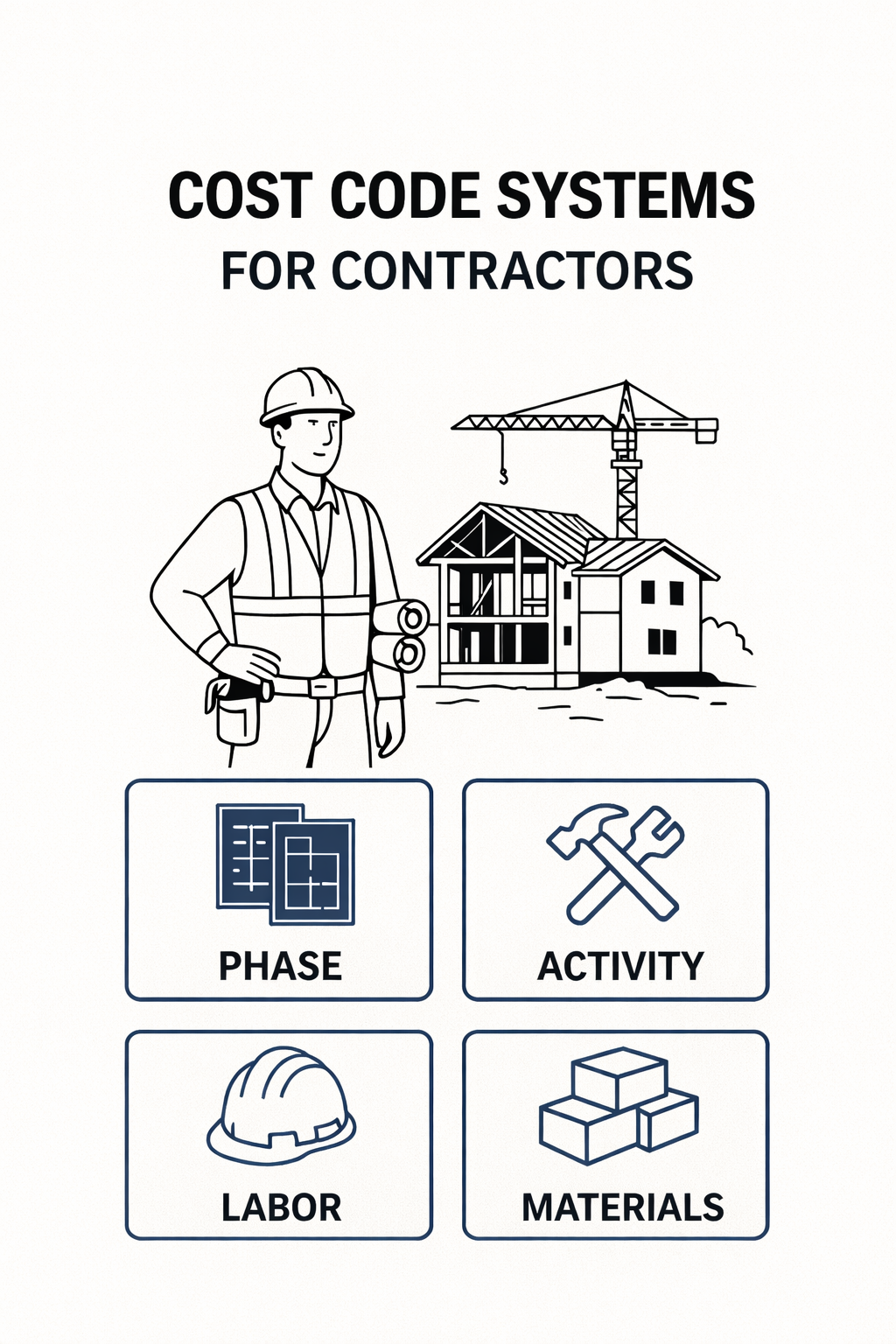
How to Build a Cost Code System for Your Trade
Learn how contractors can build trade-specific cost codes that improve job costing, invoice coding, labor tracking, and service profitability. A clear framework to create consistent cost codes for construction, trades, and remodeling companies.