
Fraud Risks for Contractors: What Weak Controls Miss
Quick Answer
Fraud risks for contractors usually come from weak systems, not dramatic theft. As construction companies grow, inconsistent reconciliations, poor labor tracking, weak invoice approvals, and missing documentation create opportunities for financial leakage. Strong construction financial controls help contractors protect cash flow, improve job costing accuracy, and catch problems before margins disappear.

Contractor Pain Point
As contractors grow from 3 active jobs to 10, the ability to “eye-ball” every receipt, invoice, payroll entry, and vendor bill disappears.
That growth creates noise.
And fraud thrives in noise.
At first, the owner sees everything:
Every material order
Every subcontractor invoice
Every crew timesheet
Every card purchase
But growth changes that.
More jobs create more invoices, more payroll activity, more vendors, more receipts, more change orders, and more opportunities for financial leakage to hide inside operational chaos.
Most contractors assume fraud would look obvious.
In reality, it usually looks normal:
Duplicate invoices
Personal purchases on company cards
Labor hours charged after a phase is complete
Unsupported subcontractor bills
Vendor balances no one reviews
Payroll spikes without production increases
This is why construction financial controls matter.
One of the strongest starting points is a consistent Job Costing Health Report and monthly review process. Contractors that regularly review labor trends, reconciliations, and job cost movement catch problems far earlier than companies operating reactively.
Core Explanation: Why Fraud Risks Increase as Contractors Grow
Most fraud risks in construction are not caused by one major criminal event.
They come from small control failures repeated over time.
As companies scale, operational complexity increases faster than financial controls improve. The owner can no longer manually verify every transaction, but many companies continue operating as if they still can.
That creates exposure.
Weak contractor invoice approvals, inconsistent reconciliations, poor labor allocation, and missing documentation allow costs to move through the system without proper review.
Common gaps include:
Bills approved without support
Credit card purchases without receipts
Labor coded to incorrect jobs
Duplicate vendor payments
Inactive employees remaining on payroll
Subcontractor insurance lapses
Missing purchase documentation
Fraud risk increases when systems depend entirely on trust and memory.
Trust matters in construction. But trust is not a financial control.
Strong systems protect both the company and honest employees by reducing confusion, temptation, and undocumented decisions.
Related internal resources:
Red Flags of Financial Leakage
Round-number invoices with no itemization
Friday afternoon invoice approvals rushed through accounting
Labor hours charged after a project phase is complete
Material costs increasing without visible project progress
Missing receipts tied to company card purchases
Vendor balances carrying unresolved charges month after month
Jobs showing accounting profit while remaining cash negative
Payroll spikes without corresponding production increases
Overtime rising without schedule pressure
Multiple “miscellaneous” expenses hitting the same job repeatedly
These issues do not always mean intentional fraud.
But they almost always indicate weak systems.
Step-by-Step Breakdown
1. Tighten Contractor Invoice Approvals
What to do:
Require every invoice to include:
Job assignment
Approval confirmation
Supporting documentation
Matching purchase records or delivery tickets
Why it matters:
Construction companies process large invoice volume quickly. Weak invoice approval controls create opportunities for duplicate billing, unsupported charges, and inaccurate job costing.
What goes wrong if skipped:
Costs get approved because they “look normal.” Vendor fraud, coding mistakes, and duplicate payments quietly distort profitability.
Related internal resource:
Contractor Invoice Approval Workflow
2. Reconcile Accounts Every Month
What to do:
Complete reconciliations monthly for:
Bank accounts
Credit cards
Vendor balances
Loans and financing accounts
Why it matters:
Monthly reconciliations are one of the strongest fraud detection tools contractors have. They help identify duplicate payments, missing transactions, unusual withdrawals, and unsupported expenses early.
What goes wrong if skipped:
Problems remain hidden for months. Cleanup becomes expensive and financial visibility deteriorates.
The Month-End Close Checklist helps contractors create a repeatable review system instead of relying on year-end cleanup.
3. Monitor Labor KPIs Aggressively
What to do:
Track labor KPIs consistently, including:
Labor cost percentage by job
Estimated vs actual labor hours
Overtime trends
Labor burden percentage
Payroll allocation accuracy
Why it matters:
Labor is one of the largest direct costs in construction. Small payroll inconsistencies create major margin erosion over time.
Monitoring labor KPIs helps contractors quickly identify unusual spikes or random upticks that deserve investigation.
Red Flags:
Labor charged after a project phase is complete
Payroll increasing without production growth
Overtime spikes without operational explanation
Labor hours posted to substantially completed jobs
Labor percentages fluctuating abnormally between periods
What goes wrong if skipped:
Ghost labor, payroll allocation problems, operational inefficiencies, or unauthorized payroll activity can quietly damage margins.
Related internal resource:
Labor Tracking & Payroll Allocation for Contractors
4. Control Company Card Spending
What to do:
Require:
Receipts for every purchase
Job coding at the point of purchase
Weekly card reviews
Clear approval rules
Why it matters:
Company cards often become “miscellaneous spending accounts” when controls are weak.
Most card leakage is not dramatic theft. It is convenience spending:
Fuel for personal vehicles
Small untracked tools
Meals without documentation
Supply purchases never tied to jobs
What goes wrong if skipped:
Small undocumented purchases slowly erode profitability and distort job costing.
A strong “No Receipt, No Reimbursement” policy improves accountability immediately.
The Job Costing Health Report can also help identify jobs carrying abnormal miscellaneous expenses.
Related internal resource:
How Contractors Should Organize Digital Receipts & Job Documents (So Job Costing Actually Works)
5. Match Bills to Job Documentation
What to do:
Connect invoices, receipts, purchase orders, and delivery tickets directly to job files before costs are finalized.
Why it matters:
Fraud risks increase when accounting records are disconnected from field operations.
What goes wrong if skipped:
Unsupported charges, personal purchases, and coding errors move directly into job costing reports.
Related internal resources:
Job Folder & Project Setup for Contractors (Why Clean Jobs Make or Break Job Costing)
Why Job Costing Breaks When Project Folders Are Inconsistent
6. Track Subcontractor Insurance & COIs
What to do:
Monitor subcontractor certificates of insurance (COIs) continuously and verify coverage remains active throughout the project.
Why it matters:
COI tracking is not just administrative paperwork. It is a financial control.
If a subcontractor’s insurance expires and no one notices, the contractor may absorb liability that should have been transferred downstream.
What goes wrong if skipped:
One uninsured incident can erase profit from multiple jobs.
Related internal resource:
Subcontractor 1099 Requirements for Contractors (What You’re Actually Responsible For)
Insider Notes / Contractor Gotchas
Fraud risks rarely begin with major criminal behavior.
Most financial leakage starts with:
Rushed approvals
Weak reconciliations
Missing receipts
Informal payroll reviews
Poor documentation
“We’ll clean it up later” accounting
Construction companies become especially vulnerable during growth phases because operational complexity increases faster than internal controls.
One major warning sign is unexplained labor movement.
If labor percentages suddenly spike or labor costs increase without production gains, contractors should investigate immediately instead of assuming the numbers will correct later.
Another common mistake is relying entirely on trust.
Trust matters in construction. But trust is not a financial control.
High-trust environments without systems can unintentionally create temptation, confusion, and undocumented decisions. Strong controls protect company culture by creating clarity and accountability.
Real-World Impact
Strong construction financial controls improve far more than fraud prevention.
Visibility
Contractors can clearly see where money is going and whether costs belong to the correct jobs.
Control
Monthly reconciliations, labor KPI monitoring, and contractor invoice approvals reduce duplicate payments, unsupported expenses, and hidden cost leakage.
Profit Protection
Small financial leaks add up quickly in construction. Better systems protect margins and improve long-term financial stability.
The Job Costing Health Report helps contractors identify weak spots before they become expensive operational problems.
The Contractor Internal Control Diagnostic
Use this scorecard to evaluate where your back-office is leaking cash. If you score more than two "High Risk" marks, your job costing reports are likely misrepresenting your actual project profitability.
The Golden Standard: The Accounts Payable "3-Way Match" Workflow
Most billing leaks occur because there is no bridge between the physical field activity and the digital general ledger. Implementing a 3-Way Match ensures that you only pay for materials that actually arrived on your job site.
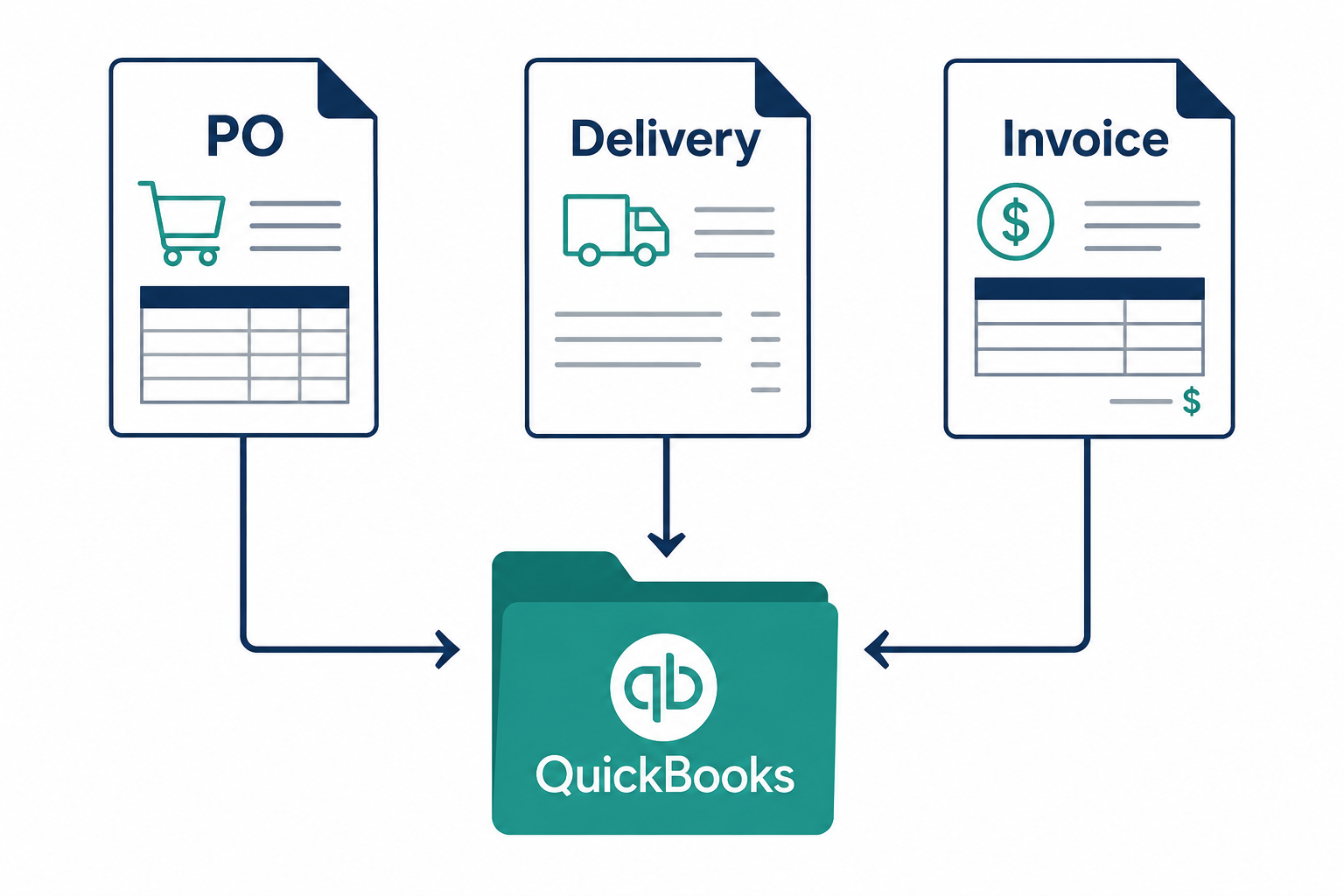
To establish this control in your business, the accounting department must verify three independent documents before approving a vendor bill for payment:
The Purchase Order (PO): What did your estimator or project manager agree to buy, and at what price?
The Receiving/Delivery Ticket: Did the materials actually arrive at the job site? (Signed by your field foreman).
The Vendor Invoice: What is the supplier actually charging you?
If the quantities, unit prices, or job assignments differ across these three documents, the invoice is immediately flagged for review. This single step eliminates duplicate billing and prevents suppliers from charging you for another contractor's materials.
Summary Framing
Fraud risks for contractors are usually operational problems before they become financial problems.
As companies grow, visibility naturally decreases. If systems do not replace that visibility, profit starts leaking through operational noise.
The solution is not suspicion.
It is structure.
Strong reconciliations, labor KPI tracking, contractor invoice approvals, documentation standards, and monthly reviews help contractors protect cash flow, improve job costing accuracy, and reduce unnecessary financial exposure.
FAQ
What are the biggest fraud risks for contractors?
Common risks include duplicate invoices, unsupported purchases, payroll manipulation, personal expenses on company cards, inaccurate labor allocation, and weak subcontractor controls.
Why are monthly reconciliations important for contractors?
Monthly reconciliations help contractors identify unusual transactions, unsupported charges, duplicate payments, and accounting errors before they become larger financial problems.
What labor KPIs should contractors monitor?
Contractors should monitor labor cost percentage, overtime trends, labor burden, estimated vs actual labor hours, and payroll allocation by job.
Why do fraud risks increase as construction companies grow?
Growth creates operational noise. More jobs, vendors, invoices, payroll activity, and subcontractors reduce visibility unless strong systems replace manual oversight.
Is trust enough to prevent fraud?
No. Trust matters, but trust is not a financial control. Strong systems protect both the company and honest employees by improving accountability and consistency.
CTA
If your construction company is growing and financial visibility is becoming harder to maintain, the Job Costing Health Report can help identify weak controls, reporting gaps, and operational issues before they turn into margin loss.



Disclaimer: This content is for general educational purposes only and does not constitute tax, legal, or accounting advice. Individual circumstances vary, and tax and reporting requirements can change. Always consult a qualified CPA, tax professional, or legal advisor for guidance specific to your business.
